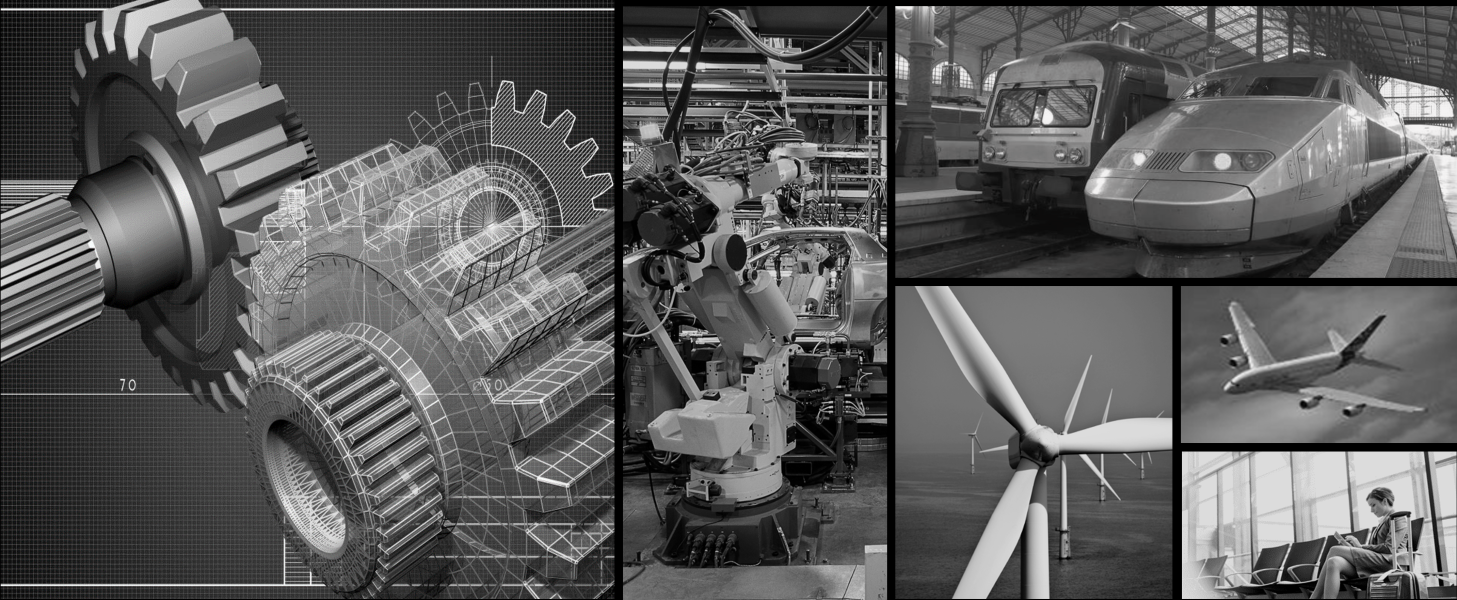
In Italy there are more than 156.754 companies (Source: Osservitalia), considered SMEs or small and medium enterprises.The small and medium Italian companies are the glue of the social fabric, which creates value on the territory offering work and producing goods and services of absolute excellence recognized worldwide.
A bit of modern history
In the aftermath of the Second World War Italy experienced a moment of great vitality, production and consumption were at the stars and in the air there was a very strong desire for growth despite being a very complex phase: consumption was very reduced, then increased during the “boom” in the 1960s. It has also been a period of hope and rebirth, which has seen small master enterprises assert themselves as a point of reference not only in Italy or in the European panorama, but throughout the world. Just think about companies like Ferrari, Montedison, but also Vimar, Indesit, Brembo among others who have created and continue to contribute to what is Italian excellence.
From the economic point of view, in the second post-war period, Italy was one of the most dynamic countries of the European continent, completing the process of transformation from essentially agricultural country to large industrial economy. It is a much more important economic progress if one thinks that the country is not rich in raw materials and must make part reference abroad to the energy sector.
That precise historical moment is also remembered for the great sacrifices, migrations and poverty.
From that time to today the degree of schooling has increased exponentially, it is said that “the worker wanted the graduated son” and this has profoundly changed the social fabric and the labor market.
Companies have begun to identify more and more specialized personnel, with increasingly higher technical qualifications, which on the other hand began to demand higher wages and treatments at the new level of education.
At the same time when the Italian landscape saw the birth of many companies, other countries such as Japan before, China and India after, entered the markets with great strength, producing consumer goods at difficult to beat prices, but also complex engineering products with competitive costs compared to the Western offer.
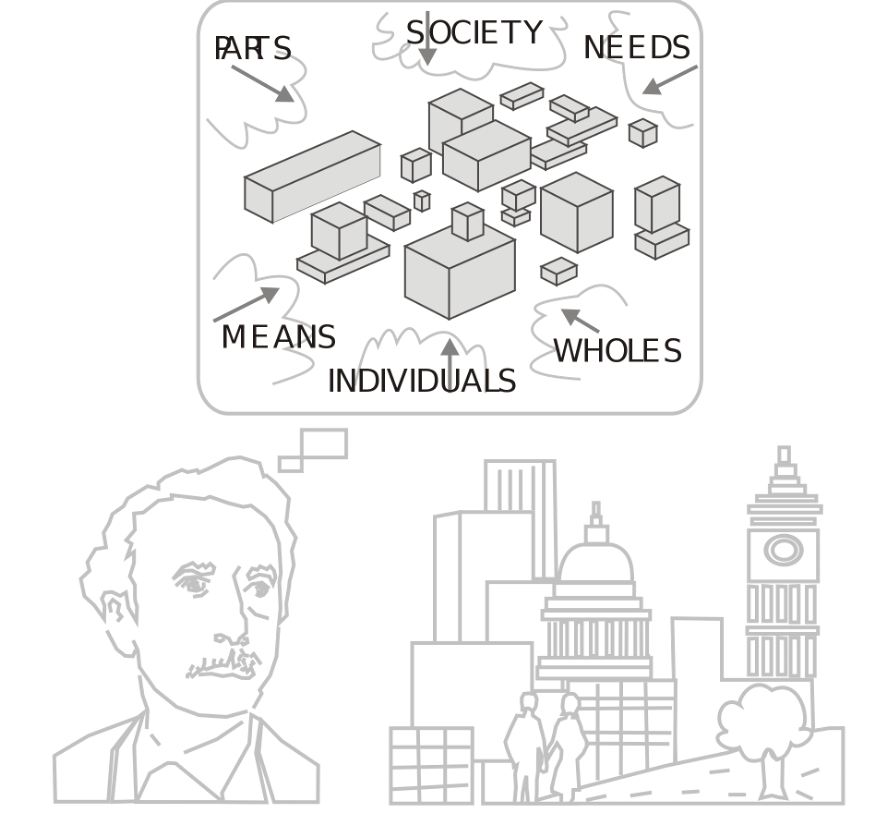
Around 1937, in Bell Telephone Laboratories In the United States the term Systems Engineering was coined, whose definition relates to the need to identify the properties and characteristics of a system in its entirety.
The U.S. military framework is, in those years, the land of florid culture in which formal processes, activities and disciplines are identified which will be the basis then not only of Systems Engineering but of modern engineering.
Competition or competitiveness?
The competition has become in recent decades literally without frontiers, and between the economic crisis close to us in 2008, in 2017 the recovery had consolidated, with an acceleration of revenues and profitability, in a context of financial solidity.
The data of the CERVED report of 2019 indicate that in the first part of 2019 the recovery has exhausted its momentum for the growth of turnover and profits.
But what is the difference between competition and competitiveness?
Competition is a phenomenon present in every social context: it is defined as pressure to achieve a certain objective/result, which an individual develops towards other individuals, who believes at its own level of physical, technical, cognitive or cognitive preparation.
Competitiveness, on the other hand, is the individual tendency to commit itself to doing its best to prevail over others; in a few words, the effort that the athlete does to win but that does not necessarily develop in every athlete in equal measure.
The question arises spontaneously is: do we want to compete or do we want to be competitive?
To increase profitability by emerging in this challenge both in our Italian and international market it is necessary to find the correct balance between competition and competitiveness.
The reduction in prices or costs to win the competition is probably a road that, in the short term can bring new contracts, but what could happen on the long term?
Maximization of capital
In the historical moment in which we are living, with the health crisis caused by Covid, who is having and will surely have for a long time repercussions on the economy, we are obliged to consider the need to find an adequate formula for, not only survive, but also to risk a hypothetical growth plan on the medium and long term.
There is no “magic” formula to leave completely free from this period, but actions can be carried out that aim to increase profitability and competitiveness on the reference markets.
In systems engineering, the real differentiator is human capital.
The Italian Ingegneristic Universities are considered a worldwide excellence for the preparation that they are able to offer to students. On the other hand, for example in the United States, technical universities offer specific and practical courses that are inherent in what is the world of system engineering, Systems Engineering, which is therefore that set of disciplines (Business or Mission analysis, Requirements Definition Process, Architecture Definition Process, Systems Analysis, Verification & Validation) considered consolidated in the international scene.
The maximising human capital can therefore be translated, in this sense, in the need to offer adequate and continuous training that aims to rationalize costs and standardization of production processes.
International and INCOSE regulations
For Systems Engineering the international landscape offers many opportunities for growth, specialization and aggregation.
INCOSE, the International Council on Systems Engineering (http://incose.org/), is the international association founded in 1990 that counts to today more than 17000 members, which is active in the dissemination of the practices of Systems Engineering and has in the association AISE representation for the Italian Chapter.
AIDhttps://aise-incose-italia.it), incorporated as an association recognized in 2015, active as Chapter Italia of INCOSE since 2009, has been very active in recent years, organizes seminars and introductory courses on numerous themes: the management of requirements, the “systems architecting”, the “architectural frameworks”, the SysML, the security of systems and others. It has also established good relations with local representatives of other associations, such as AFCEA and SMEs, and with various academic institutions, which allowed the organization of courses on Systems Engineering within various post-university Master programs.
For System Engineers, INCOSE offers three levels of professional certification, ASEP, CSEP and ESEP that certify the knowledge of what are disciplines, processes and activities at the base of System Engineering.
The certification process varies according to the type you want to achieve, and certifications are personal, internationally recognized.
To add value, more and more companies today require personal CSEP or ESEP certificate for participation in international tenders.
In order to better support the work teams, a number of reference standards were formalized and promoted precisely with the aim of normalizing processes and offering patterns of approach common to the problems faced during all phases of creating a system: from the initial idea and validation of the business case, to engineering and realization, up to the disposal or disposal of the system or product.
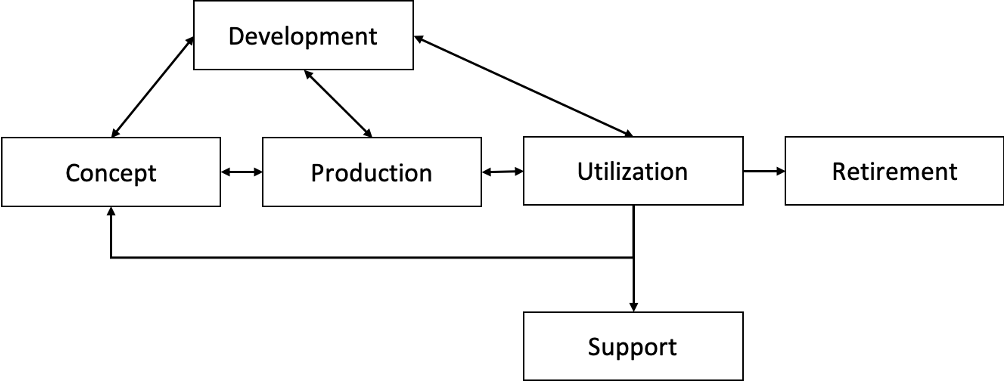
ISO / IEC / IEEE 15288 defines the processes and activities to be followed for the realization of successful engineering systems, as well as ISO / IEC / IEEE 15289 concerning the creation of the Products.
As any legislation cannot be taken literally, but analyzed and “absorbed” according to the real business needs, since otherwise it could lead to a burden of processes, thus becoming counterproductive and risking to vanify the goal.
As with a good shirt of which there is no size that goes well to anyone, standards should also be carefully analyzed, so as to establish the goals and make the processes and activities connected to them appropriate to the working team that will have to adopt them. In this juncture it is absolutely necessary the intervention of experts who, studying from the outside the processes in use, can direct the team to a true improvement, avoiding “insessature” unnecessary.
These ISO standards and practices suggested by INCOSE, if applied correctly, can offer companies and engineering teams the “fil rouge” to run successful programs that can reduce costs and drastically increase productivity, becoming the key diversiator that will prefer a company and a team of work rather than another, making Italian companies competitive and ready to compare in every market, both internal and international.